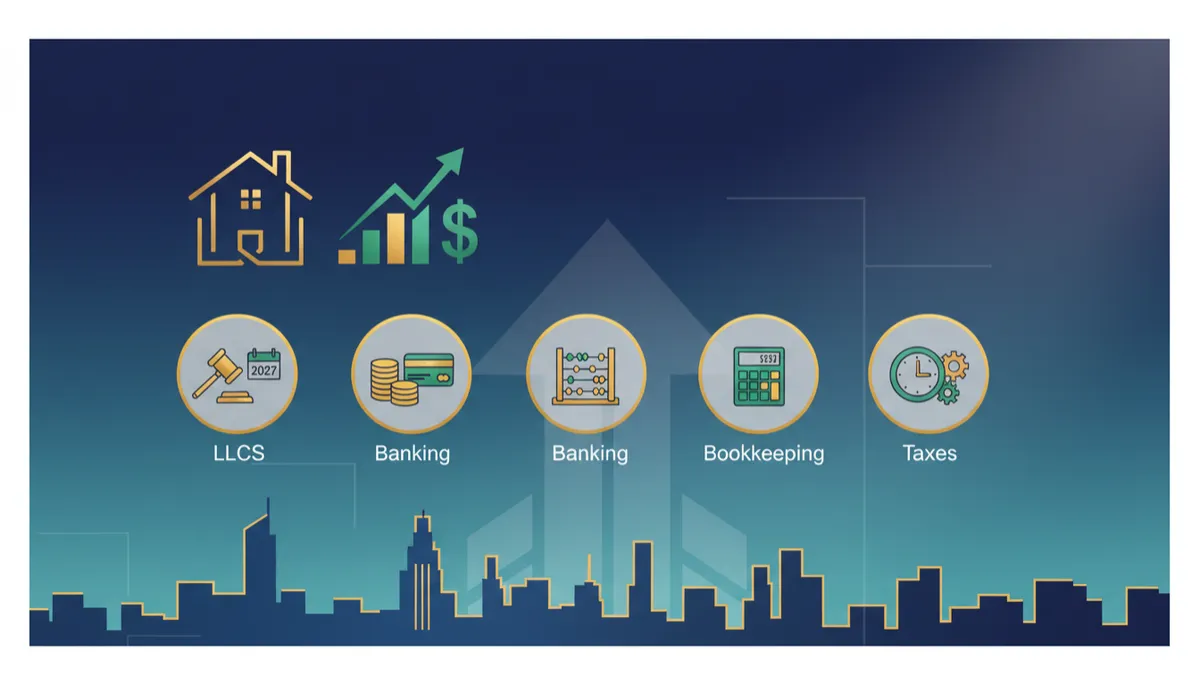
Prepare Your Real Estate Business for 2027 Success
Real Estate Investing, Business Setup, Taxes, LLCs, Banking, Bookkeeping
Get Your Real Estate Investing Business Ready for 2027
Taxes, LLCs, banking, and bookkeeping are the foundation of a serious real estate investing business. If you plan to buy property in 2027, now is the time to get your business house in order so you can move quickly and confidently when opportunities appear.
Why 2027 Investors Need a Business Mindset Now
When many new investors think about real estate, they focus on finding the “perfect” property. In practice, the investors who last are the ones who treat real estate as a business from day one. The way you handle taxes, legal structure, banking, and bookkeeping will influence your cash flow, your risk, and your ability to scale far more than a single deal ever will.
One of the best books for understanding this shift is Rich Dad's CASHFLOW Quadrant: Rich Dad's Guide to Financial Freedom.
1. Understand Your Taxes Before You Buy
Do not wait until April 2028 to discover how your 2027 deals are taxed. Schedule time now with a certified public accountant who works regularly with real estate investors. Your goal is not just to “file a return,” but to design a tax strategy that supports your investing plan for the next several years.
Clarify how your strategy is taxed: Flips, long-term rentals, short-term rentals, and development projects can all be taxed differently. Some income may be treated as ordinary income, some as passive, and some as capital gains, each with different implications for your overall return.
Learn the key deductions: Interest, taxes, repairs, travel, education, and professional fees may be deductible when properly documented. With Section 179 expensing limits increasing to approximately $2.64 million for 2027 and permanent 100 percent bonus depreciation on qualifying property, you and your CPA should discuss how to time improvements and acquisitions to make the most of these rules (content.govdelivery.com, irs.gov).
Ask about Opportunity Zones and SALT: The redesigned Opportunity Zone program beginning in 2027, along with a temporarily higher $40,000 cap on state and local tax deductions through 2029, may affect how you structure certain deals and where you invest.
📌 Key Takeaway: Treat your first tax meeting as a strategy session, not a paperwork chore. Go in with questions about your 2027 plans, not just last year’s receipts.
2. Set Up Your LLC Properly, Not Hastily
Limited liability companies are popular among real estate investors because they can separate business assets from personal ones. However, an LLC is not a magic shield. It protects you only when it is set up and operated correctly, and when it fits your actual strategy and state rules.
Know your state’s requirements: Every state has its own filing fees, annual report rules, and publication or registered agent requirements. Some are more favorable to real estate investors than others, and some have specific rules for LLCs that own property.
Draft a real operating agreement: Whether you are investing alone or with partners, a written operating agreement should spell out ownership percentages, capital contributions, decision-making authority, voting rights, and what happens if someone wants to exit the deal or passes away. This is especially important when you plan to scale into multiple properties or bring in private capital.
Choose your tax treatment intentionally: Many real estate LLCs default to pass-through taxation, but you can elect to be taxed as an S corporation or C corporation in some situations. Work with your CPA and attorney to decide what fits your income level, investing style, and long-term goals, rather than copying what a friend did.
⚠️ Warning: Buying property in your personal name “for now” and planning to “move it into an LLC later” can create financing, tax, and legal complications. Discuss the right approach with your advisors before you sign a contract.
3. Get Your Bookkeeping in Order from Day One
Bookkeeping is more than saving receipts. It is the system that tells you whether your deals are actually profitable and whether you can safely grow. Clean books also make tax preparation smoother and give lenders and partners confidence in your numbers.
Track every dollar: Record all income and expenses, including deposits, repairs, utilities, insurance, property management, travel, and education. Use accounting software instead of a simple spreadsheet if you plan to grow beyond a single property.
Separate by property or project: Create classes, tags, or cost centers so you can see performance by property. This helps you identify which deals are carrying their weight and which may need a rent increase, refinance, or exit plan.
Close your books monthly: Set a recurring time each month to reconcile accounts, review cash flow, and update your CPA or bookkeeper. Waiting until year-end often leads to missed deductions and rushed decisions.
💡 Pro Tip: Ask your CPA which categories and reports make tax time easiest. Build your bookkeeping system around that structure now so you are not reorganizing everything next spring.
4. Start Thinking Like a Business Owner, Not Just a Buyer
The biggest shift you can make before 2027 is mental. Instead of asking, “How do I buy a property?” start asking, “How do I build a real estate investing business that supports my long-term goals?” That includes your systems, your team, and your education, not just your next deal.
One helpful resource for this mindset shift is Rich Dad’s CASHFLOW Quadrant: Rich Dad’s Guide to Financial Freedom. The book explains the difference between working for money and building businesses and investments that can pay you whether you show up or not. As you prepare for 2027, use that framework to decide how you want your investing business to look five or ten years from now, not just after your first purchase.
Use Education and Networking to Accelerate Your 2027 Plan
Building a real estate business is easier when you are not doing it alone. Surround yourself with other investors, professionals, and educators who understand the current tax rules, financing environment, and local market dynamics. Events, masterminds, and workshops can shorten your learning curve and introduce you to lenders, agents, and partners who are already active in the space you want to enter.
📌 Key Takeaway: Do not make your first goal for 2027 simply “buy a property.” Make your goal to build a real estate investing business with the right structure, systems, and relationships to support multiple deals over time.
Next Steps: Start the New Year Right
Book a meeting with a real estate-focused CPA to map out your 2027 tax strategy, including depreciation, Section 179 planning, and any Opportunity Zone or SALT considerations.
Consult a qualified attorney about the right LLC structure, operating agreement, and asset protection plan for your situation and state.
Open or upgrade your business bank accounts and set up a bookkeeping system that can grow with you.
Invest in your education and network by attending real estate investing events and masterminds where you can learn from active investors.
To stay informed about upcoming educational opportunities and networking events, you can be notified of our events here: Elite REI Mastermind Events.
Educational information only. Consult qualified tax, legal, and financial professionals about your situation before making decisions.